- Amazon
- Flipkart
- Meesho
- Amazon Seller FlexNew
- Shipping Label GeneratorShipping LabelNew
- IndiaMart CRM
- Other tools
- Price
- Login

29-09-2026 · PDF Cropper
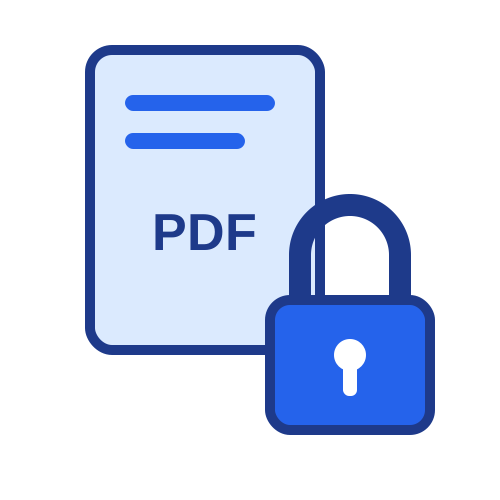
We share private documents every week - salary slips for a loan, bank statements for a visa, contracts with clients and ID proofs with landlords. Most of them travel by email or WhatsApp with no protection at all. This guide explains how to send confidential documents safely with PDF Cropper, using simple habits and the free Lock PDF tool.
Once you send a file, you lose control of it. Emails get forwarded, chat backups are stored in the cloud, phones are lost and shared computers keep downloads. A document with your account number, PAN or salary can be misused if it reaches the wrong person. Password protection makes sure the file stays unreadable even if it ends up somewhere you didn't intend.
Before sending, check whether the receiver needs the whole document. A loan agent may need only the last three months of a statement, not the whole year. Remove extra pages with Split PDF so you share less personal data. If the file is large, make it smaller with Compress PDF so it sends quickly.
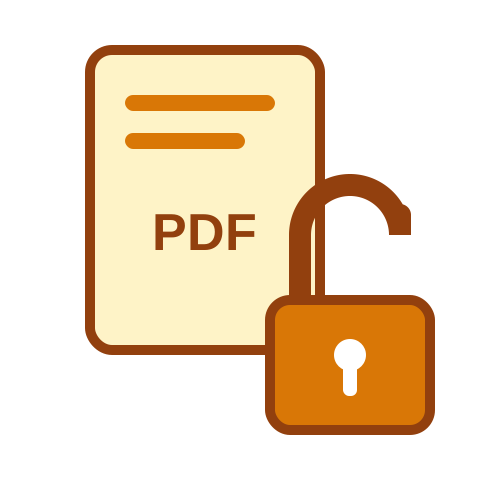
Upload the document to the Lock PDF tool, set a strong password and download the protected copy. The file is encrypted with AES-256, so no PDF reader can open it without the password. If the receiver should only read the document, add restrictions to block printing and copying.
Email the file and send the password by SMS, WhatsApp or a call.
For regular documents, agree on a pattern such as initials plus birth year.
Don't put the password in the email subject or file name.
Ask the receiver to confirm they can open it.
Using a separate channel means someone who sees one message still can't open the file.
A file named Aadhaar-Card-Rahul-Sharma.pdf tells everyone what is inside. Use neutral names like Document-March.pdf for sensitive files. It is a small step, but it avoids drawing attention to private files in shared folders and chat lists.
Chat apps are convenient, but files stay in chat history, backups and the receiver's gallery or downloads for a long time. Locked PDFs stay protected wherever they are copied. For very sensitive documents, delete the chat message after the receiver has downloaded the file.
Online sellers and small businesses share invoices, price lists and supplier agreements every day. Lock documents that contain margins, bank details or customer data, and share the password only with the person who needs it. Customers and partners notice when a business handles their data with care, and it builds trust over time.
Sending the password in the same email, using 123456 or a date of birth as the password, and forgetting the password yourself are the most common mistakes. Choose a strong password, store it in a password manager, and keep an unlocked original on your own device.
Learning how to send confidential documents safely by email and chat takes just a few habits: share only what is needed, lock the PDF, send the password separately and name files carefully. The free Lock PDF tool makes secure document sharing simple, and it is the easiest way to email documents securely without special software.
For businesses, it helps to write these steps down as a simple rule for everyone who handles customer or employee documents. When every team member locks sensitive files and shares passwords on a separate channel, mistakes become rare and customers feel their data is respected. For individuals, the same steps take less than a minute and protect you from identity theft and fraud. Whether you are applying for a loan, renting a flat or sending a contract, a locked PDF and a separately shared password are the safest way to send any sensitive file. Once the receiver has confirmed they have the document, you can also delete the sent message from your chat app to reduce the number of copies that exist.
Last Updated: 23-09-2026