20-09-2026 · PDF Cropper
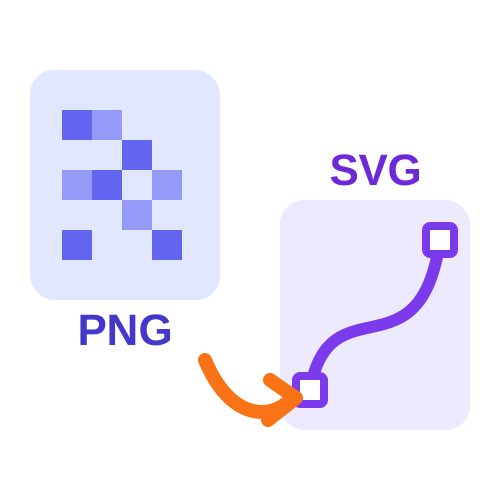
A logo saved as PNG looks fine on a website, but it turns blurry the moment you enlarge it for a banner, a shop board or product packaging. Converting it to SVG fixes that, because an SVG is made of shapes instead of pixels. The PNG to SVG converter does the tracing for you in a few clicks.
The cleaner the source, the cleaner the vector. Use the largest version of your logo, ideally on a plain or transparent background. Screenshots and heavily compressed JPGs add noise that turns into extra shapes.
Choose a PNG, JPG or WEBP file up to 20 MB.
Colour mode traces every colour as its own layer - the right choice for most logos.
Match it to your logo. A three-colour logo needs only a handful; more colours keep shading but make a bigger file.
Linear and radial gradients are rebuilt as real SVG gradients instead of colour bands.
Check the SVG next to the original, then download the file or copy the SVG code.
Edges should stay smooth at any size - that is the whole point of SVG.
Tiny letters are the hardest part to trace. Raise the detail level if they look soft.
Turn on SVG compression for a smaller file that looks exactly the same.
A good logo SVG takes a clean source image and the right colour count. With the PNG to SVG converter you can have a scalable logo ready for print and web in under a minute.
Last Updated: 23-09-2026